PPE
Definition:
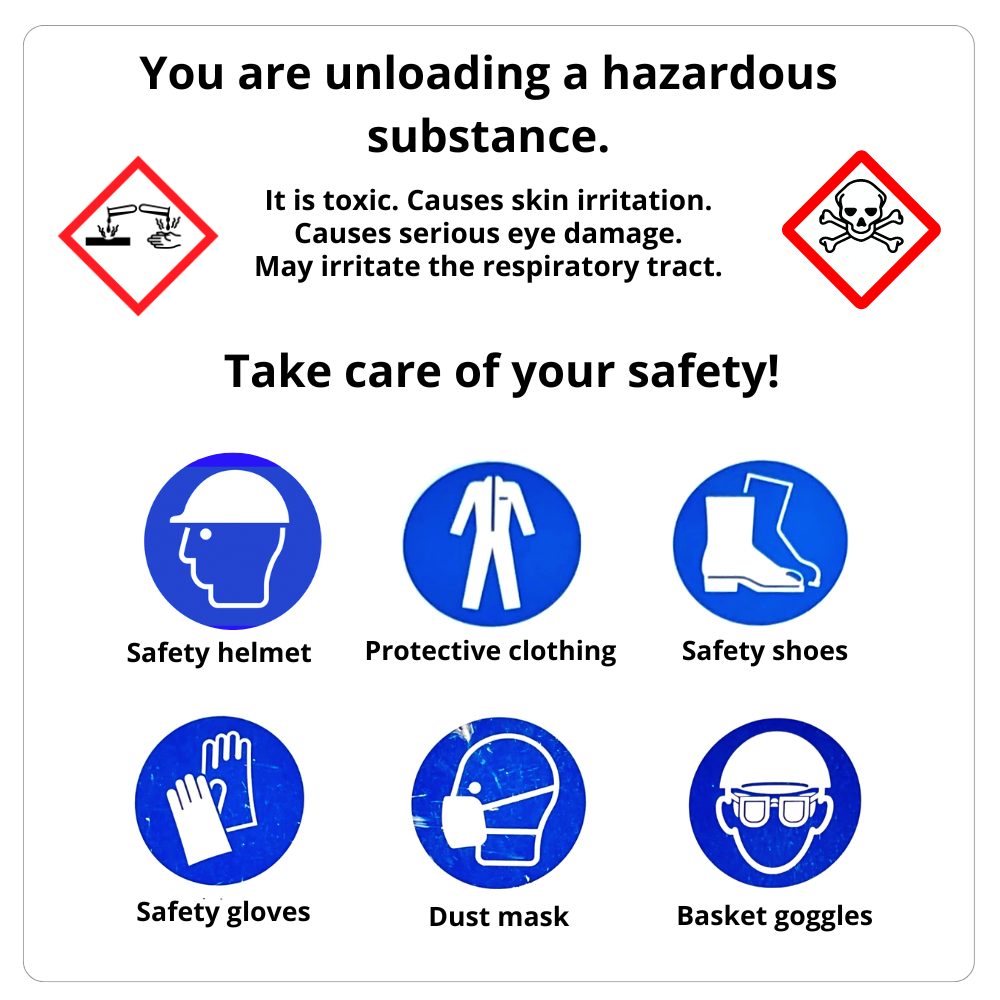
PPE (personal protective equipment) includes all equipment and protective clothing that workers wear to protect their health and safety at work.
PPE is used when risks cannot be prevented through technical or organizational measures. It protects against mechanical, chemical, thermal, biological and physical risks (e.g. heat, cold, noise, fall, chemicals, gases).
Examples of PSA:
- Head protection: Safety helmets against shocks and falling objects
- Eye & face protection: safety glasses, face protection
- Hearing protection: earplugs, earplugs
- Respiratory protection: filter masks, respirators
- Hand protection: Chemical, heat, or cut-resistant gloves
- Body protection: protective suits, safety vests, flame retardant clothing
- Foot protection: safety shoes (e.g. with steel toe, anti-slip sole)
Duties & standards
Employers are required to provide PPE and to train employees. PPE must comply with EU regulations and standards (e.g. EN standards) and be regularly tested.
Relation to logistics & dangerous goods
In logistics and chemical environments, PPE is used in particular when entering factory facilities, during loading/unloading processes, when handling chemicals and when working in ex/hazardous zones.
Sources/further links:
EU PPE Regulation (EU) 2016/425: https://eur-lex.europa.eu/legal-content/DE/TXT/?uri=CELEX%3A32016R0425
DGUV — personal protective equipment: https://publikationen.dguv.de
BAuA — PSA basics: BAuA - Personal protective equipment - Federal Institute for Occupational Safety and Health
OSHA PPE standards (US reference): https://www.osha.gov/personal-protective-equipment
Challenges when using PPE:
Unclear PPE requirements at sites
Drivers and external service providers often do not know in advance which PPE is mandatory at the site (e.g. helmet, safety goggles, safety vest, safety shoes). This leads to delays and security risks.
Sources/further links:
ECTA/CEFIC — Guidelines for safe loading/unloading & access: Guidelines | ECTA - European Chemical Transport Association
Inadequate instruction & incorrect use
Lack of training or incorrect use of PPE can reduce the protective effect and lead to accidents.
Sources/further links:
DGUV — Instruction requirement & use of PPE: https://publikationen.dguv.de
Loady's solution:
Clear, site-specific PSA information
Loady shows drivers which PPE is required (e.g. helmet, safety goggles, safety vest, gloves, safety shoes) before they arrive. This creates transparency and reduces inquiries. Specialized PPE requirements can also be stored for the transport of dangerous goods, such as basket safety glasses, chemical protection gloves or protective shoes according to a specific safety class (e.g. S3 or S5). Loady allows such extended requirements to be precisely mapped — differentiated by substance class, risk potential or process step. As a result, even complex dangerous goods rules are clearly conveyed and safety is increased along the entire supply chain.
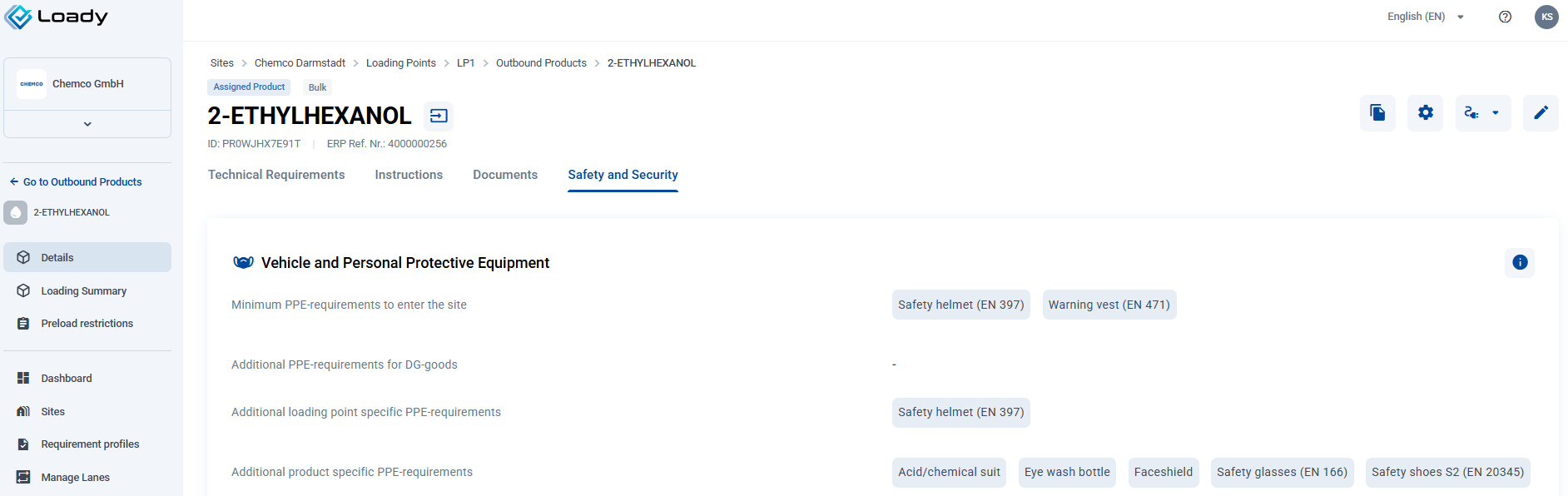
Multilingual & visual instructions
PSA requirements are provided in an understandable way as symbols, text and images — including QR codes for mobile viewing and driver instruction.