Reliable service — even with increasing demands
Customers' requirements for transparency, reliability and smooth processes are constantly increasing — regardless of the economic situation. At the same time, companies are under considerable cost and resource pressure. Today, service quality must improve without causing additional effort or additional costs.
Reliable service is not achieved through more communication, but through stable processes and reliable information.

Customers demand reliable transport — now more than ever
Customers expect their suppliers to know how to deliver the ordered goods to the respective location. This includes that opening hours, acceptance conditions, safety requirements, necessary equipment or time slots are correctly documented, kept up to date and taken into account during transport processing.
At the same time, recipients of goods are also under high cost and resource pressure. Small teams and tight time windows leave little room for error. Incidents such as failed journeys, waiting times or unmet acceptance conditions quickly become relevant cost factors on the customer side — and directly shape service perception.
Transport quality as a competitive factor
Products are increasingly comparable in many markets. Customers then decide not only on the basis of price or product features, but on how reliable the collaboration works. High transport quality is therefore becoming a relevant differentiating factor.
Suppliers who process deliveries stably, predictably and without incidents reduce customer effort — and secure a competitive advantage. Conversely, unreliable transport quality can quickly result in customers changing their supplier, even if the product and price are comparable.

How Loady enables reliable service
Loady creates a common, structured information base for all parties involved in a transport. Logistic-relevant requirements are maintained centrally and made available throughout the entire process — regardless of systems, roles or partners.
1. Reliable deliveries as a basis for customer loyalty
Service problems often arise when delivery requirements are incomplete, inconsistent or out-of-date. Customers expect their suppliers to know how to deliver the ordered goods to the respective location — and that these requirements are taken into account during transport processing.
Loady ensures that location, customer and product-specific requirements are available completely, clearly and in multiple languages before a transport is ordered or planned. Transport quality is therefore not dependent on the knowledge of specific individuals, but is systematically ensured — regardless of which logistics partner carries out the transport.


More reliable deliveries to customers
Fewer discrepancies between planning and execution
More stable promises to customers
2. Fewer escalations — better customer service perception
Unclear or missing information leads to escalations in day-to-day business: telephone calls between scheduling, location and customer, short-term clarifications or discussions about responsibilities. These situations tie up time and directly shape customer service perception.
Loady reduces these escalations by allowing all parties involved to access the same verified information base. Requirements are no longer clarified on a situational basis, but are clearly available in advance and taken into account in a binding manner.

Fewer complaints and special clarifications
Quieter collaboration with customers
Lower communication costs in service
3.Quieter processes at operational interfaces
Products are increasingly comparable in many markets. Customers then increasingly decide on how reliable the collaboration works. At the same time, shippers are under cost pressure, work with smaller teams and must use or change logistics partners more flexibly.
Loady makes it possible to ensure consistently high transport quality, even if structures or partners change. Service quality remains stable because it is based on clear, verified information — not on individual agreements or established routines.
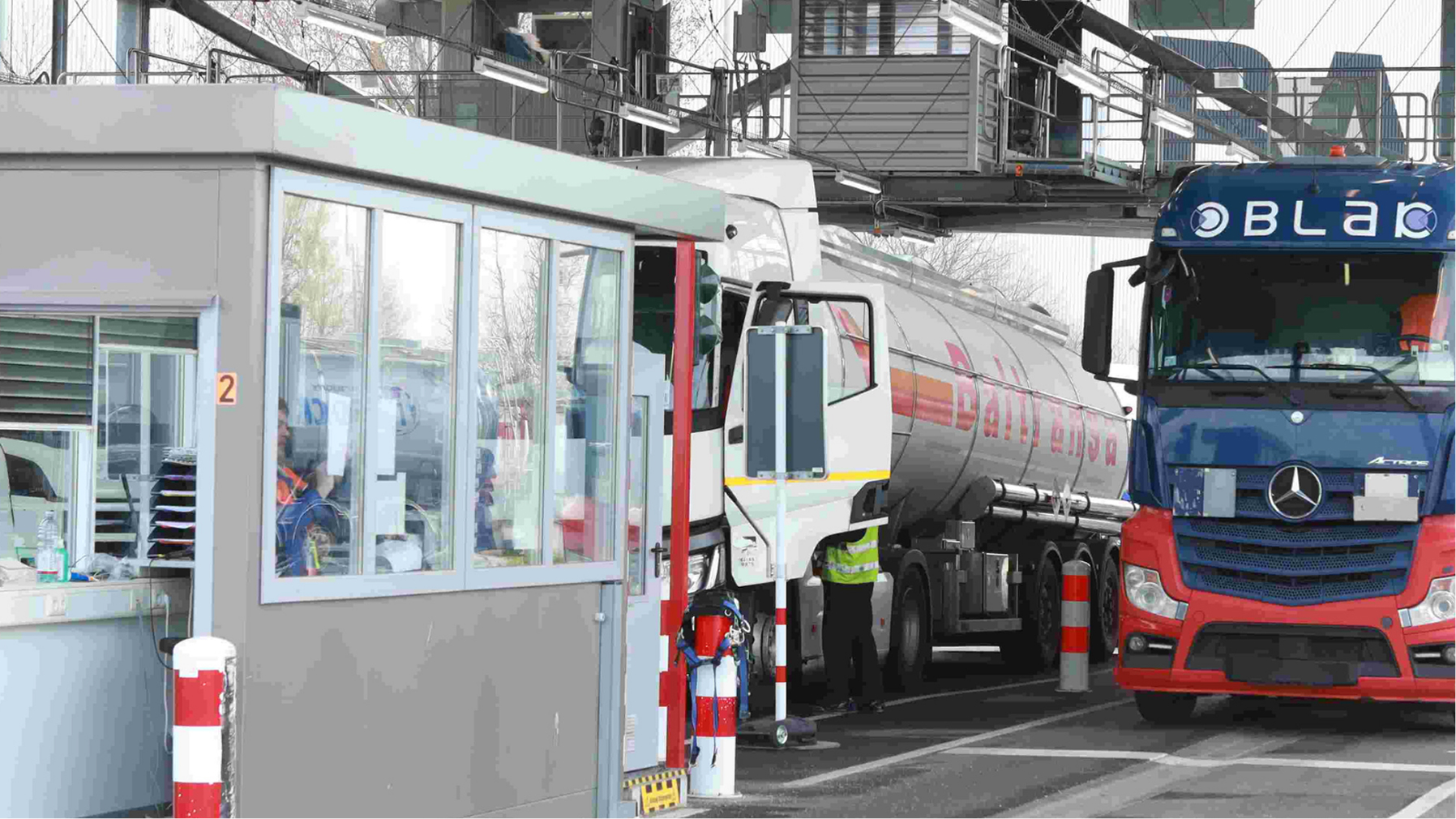
Consistent transport quality even with organizational changes
Meeting increasing customer expectations without additional costs
Reliable service as a competitive differentiator

Loady customers confirm

Fewer plan deviations due to clearly available requirements
More reliable processing even with complex delivery conditions
Significantly fewer escalations in day-to-day operations
Noticeably quieter collaboration with customers
Reduction of incorrect trips and incidents at gates and ramps by 30-60%
Fewer service-related reasons for customer escalations or supplier changes
Why act now
When products become comparable, the reliability of delivery determines the competitive advantage. Increasing customer expectations are met with cost pressure, smaller teams and increasingly changing logistics partners. Under these conditions, transport quality can no longer be ensured through individual coordination or established routines.
Companies that now base their transport quality on a reliable, digital basis consistently meet customer expectations — and at the same time reduce the risk of losing competitiveness due to service problems.

Stefanie Kraus
Co-Founder & CEO
If necessary, we can help you calculate the benefit case, which shows the benefits and savings potential of Loady for your company — with a comprehensible method, real figures and a clear ROI assessment for a well-founded decision.

Explore Loady
Industry solutions

Precise delivery processes are crucial in the automotive industry — Loady ensures clear transport requirements and prevents delays.

Whether raw materials, specialty chemicals or distribution - Loady delivers clear transportation requirements and prevents delays.
.avif)
In the environment of large construction sites, dynamically adaptable, clear loading and unloading requirements are essential for safety, efficiency and on-time delivery.

With clear loading requirements, route planning and time window management run better - and logistics centers can better calculate when goods arrive and are redistributed.

In particular, liquid transport due to the risk of product contamination — but also deliveries of packaged goods — benefits from clear requirements for safe loading and unloading.
.avif)
In industrial production, clear requirements help to reduce loading times and errors, and thus also rework, which ensures the flow of materials and has a positive effect on production and logistics costs.
.avif)
In mechanical engineering, Loady supports the mostly time-critical delivery of materials and the delivery of finished goods - often in special sizes with special customer requirements.
%202.avif)
Logistics service providers benefit from clear requirements and reduce waiting and downtime, empty and extra km — they also enable new drivers to be onboarded quickly.

Energy generation, waste incineration and recycling are part of KRITIS, whose requirements Loady sustainably supports, particularly when instructing truck drivers and service providers.

Connect Loady to your business processes
Loady fits directly into existing ERP, TMS, yard, eCommerce, procurement and telematics systems, so that all charging requirements are automatically available in its own corporate and logistics systems.
Support as needed
We'll guide you through the onboarding process and, with introductions and best practices, ensure that your team is quickly trained and can take action. If necessary, we can help you create and update data sets in Loady.
That's what our say
customers about Loady