Digital pre-product testing as an integral part of cleaning certificates
In liquid bulk logistics, it is not only cleaning — but the professionally correct evaluation of intermediate products that determines whether a tank can be loaded admissibly. Electronic cleaning certificates (eECD) now document cleaning and previous product. What has been missing so far is the systematic validation of this information against company-specific pre-charge restrictions. Loady supplements cleaning certificates with exactly this functional test logic — digital, standardized and interoperable.

Documentation is not the same as validation
Cleaning certificates document which product was previously transported and which cleaning was carried out. However, they do not automatically answer the technical question of whether this intermediate product is permitted for the next load — or whether the selected cleaning is sufficient. This evaluation depends on company-specific pre-loading restrictions. And it is precisely these that are often not available in a structured and cross-system manner, but in individual lists, Excel files or internal regulations. The audit is usually carried out manually — through comparison, experience or inquiry. Especially in the case of complex chemical transports, this leads to delays, uncertainties and unnecessary multiple cleanings.

Time lost in scheduling
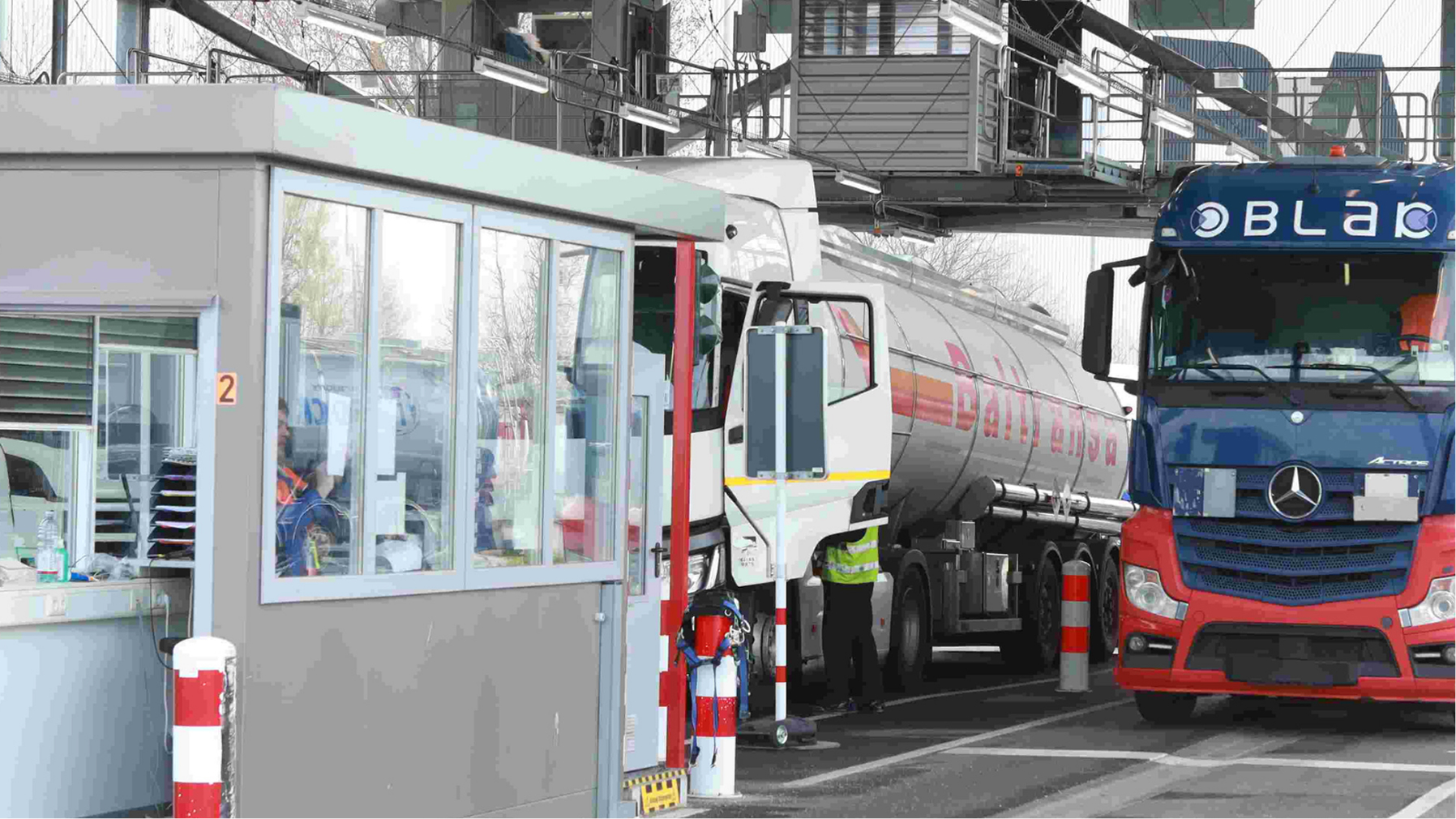
Deceleration at factory gates
Multiple cleanings from uncertainty
Unnecessary additional trips
Operational uncertainty

Between the world of paper and digital transformation
At the same time, the industry is in transition. Electronic cleaning certificates (eeECD) are gaining in importance, but are not yet established across the board. Many cleaning stations continue to work paper-based or with isolated software solutions. The switch to completely digital processes is demanding:
- numerous participants are involved
- Existing processes are deeply rooted
- Regulatory requirements leave no room for error
Industrial companies are therefore faced with a dilemma: They need greater security and efficiency — but they cannot abruptly replace existing structures. This is exactly where the need for a solution that combines documentation and technical validation — regardless of whether a certificate is issued electronically or on paper.
How Loady supports (electronic) cleaning certificates
1. Technical validation directly before the cleaning process
In the case of order-related cleaning, the product to be loaded may already be known. Cleaning stations or connected systems can record the initial product and cleaning code and call up Loady's EPLR logic via an interface.
The result (permitted/not permitted/additional cleaning required) can be documented directly in the electronic cleaning certificate.

No separate manual list check
Higher product safety
Faster approval for loading
Reliable proof of quality for shippers and factory
2. Integration into existing EECD applications
Loady supplements electronic cleaning certificates without replacing them. Vendors such as ECLIC (eECD), Bulkvision, or other digital certificate solutions can integrate preload restriction testing.
In this way, a cleaning certificate becomes a validated test certificate.

Digital quality control directly in the existing system
No parallel Excel lists or shadow checks
Higher transparency for industrial companies
Interoperable solution along the process chain
3. Use even with paper-based certificates
Not all cleaning stations work completely digitally. The EPLR check can also be integrated with paper-based or isolated software solutions. The test result can be issued as a note or stamp on the certificate.

No forced system change
Gradual digitization possible
The same professional security regardless of the certificate format
Pragmatic integration into existing processes
4. Better test quality through improved data basis
The quality of validation depends largely on how reliably precursors are recorded. The more freight forwarders digitally transfer their previously transported products from TMS systems or driver data, the more precise the Check.Loady supports structured product recognition, classification and continuous data maintenance.

Fewer misclassifications
Lower risk of incorrect approvals
Fewer multiple cleanings
Continuous improvement of data quality
Loady as a link between cleaning, freight forwarding and industry
Cleaning stations document cleaning. Freight forwarders record intermediate products. Industrial companies define pre-charge restructions.Loady combines these three levels.
Instead of keeping restriction lists separately, synchronizing them manually or ignoring them as a precautionary measure in case of doubt, structured pre-load restriction data is available across systems — as a joint technical reference. This is how:
- consistent quality logic
- less room for interpretation
- higher transparency between all parties involved
- a more stable process from cleaning to scheduling to loading
Existing certificate systems remain in place and Loady supplements them with the lack of technical validation.
Cleaning certificate and eECD systems that complement Loady
Loady supplements existing certificate and cleaning software with structured pre-charge restriction data and EPLR test logic — without replacing existing systems.Typical systems and environments:Electronic cleaning certificates (eECD)
- ECLIC (eECD)
- Bulkvision
- EFTCO-related digital certificate solutions
- national or industry-specific EECD platforms
Cleaning software/station solutions
- Software solutions for tank cleaning stations
- EFTCO form systems
- in-house certificate tools
- PDF or paper-based documentation systems
Loady can:
- be integrated into electronic EECD systems via API
- Automatically replay test results
- or, in the case of paper-based certificates, can be issued as a digital verification note (e.g. stamp/check note)
This results in professionally validated quality assurance — regardless of the degree of digitization of the cleaning station.
Using data along the logistics process

Why this is relevant now
The requirements in liquid bulk logistics are increasing:
- Product safety
- Documentation quality
- cost control
- sustainability
At the same time, industry and logistics are under pressure to make operational processes more efficient. Manual testing processes are error-prone and time-consuming. Multiple cleanings, rejections and additional trips cause avoidable costs and emissions. Electronic cleaning certificates are becoming increasingly important — but they only develop their full potential when documented cleaning and professional validation are combined. Structured pre-load restriction data is a prerequisite for this.

Stefanie Kraus
Co-Founder & CEO
If necessary, we can help you calculate the benefit case, which shows the benefits and savings potential of Loady for your company — with a comprehensible method, real figures and a clear ROI assessment for a well-founded decision.
Explore Loady
Industry solutions

Precise delivery processes are crucial in the automotive industry — Loady ensures clear transport requirements and prevents delays.

Whether raw materials, specialty chemicals or distribution - Loady delivers clear transportation requirements and prevents delays.
.avif)
In the environment of large construction sites, dynamically adaptable, clear loading and unloading requirements are essential for safety, efficiency and on-time delivery.

With clear loading requirements, route planning and time window management run better - and logistics centers can better calculate when goods arrive and are redistributed.

In particular, liquid transport due to the risk of product contamination — but also deliveries of packaged goods — benefits from clear requirements for safe loading and unloading.
.avif)
In industrial production, clear requirements help to reduce loading times and errors, and thus also rework, which ensures the flow of materials and has a positive effect on production and logistics costs.
.avif)
In mechanical engineering, Loady supports the mostly time-critical delivery of materials and the delivery of finished goods - often in special sizes with special customer requirements.
%202.avif)
Logistics service providers benefit from clear requirements and reduce waiting and downtime, empty and extra km — they also enable new drivers to be onboarded quickly.

Energy generation, waste incineration and recycling are part of KRITIS, whose requirements Loady sustainably supports, particularly when instructing truck drivers and service providers.

Connect Loady to your business processes
Loady fits directly into existing ERP, TMS, yard, eCommerce, procurement and telematics systems, so that all charging requirements are automatically available in its own corporate and logistics systems.
Support as needed
We'll guide you through the onboarding process and, with introductions and best practices, ensure that your team is quickly trained and can take action. If necessary, we can help you create and update data sets in Loady.
That's what our say
customers about Loady