
Multilingual, easy-to-understand driver instructions
This is what the future of driver interaction looks like. Whether shared via link before arrival or printed as a QR code at the gate or loading dock—from now on, even first-time drivers can easily navigate unfamiliar locations. With intuitive images from the driver's perspective, pictograms, and support for 16 languages, driver briefings become effortless. Even for complex procedures and equipment that drivers need to operate, like self-collection scenarios. All without requiring drivers to install any additional apps.




Changing drivers, language barriers, safety risks — an everyday problem
Language barriers lead to misunderstandings
Many drivers don't speak German. Your safety instructions go misunderstood—drivers nod politely but act incorrectly. The result: incidents, delays, and safety risks at your loading docks.Wiederholen
DGUV instruction requirement must be met
You're legally required to brief every driver on site-specific hazards—in a language they understand and with complete documentation. In critical infrastructure environments, violations can result in hefty fines and liability risks.
Manual instructions cost valuable time
Your staff must brief each arriving driver individually. During peak traffic, this creates bottlenecks, wait times, and frustration—on both sides.Wiederholen
This is how Loady accompanies drivers from arrival to departure
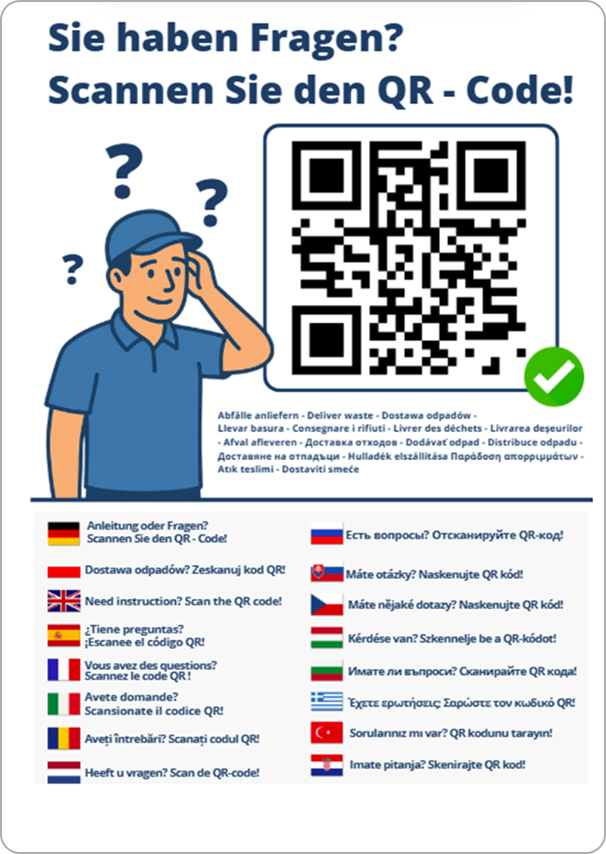
Provide the information digitally or place QR code posters at the relevant locations on your premises — drivers scan and immediately receive all instructions in their language.
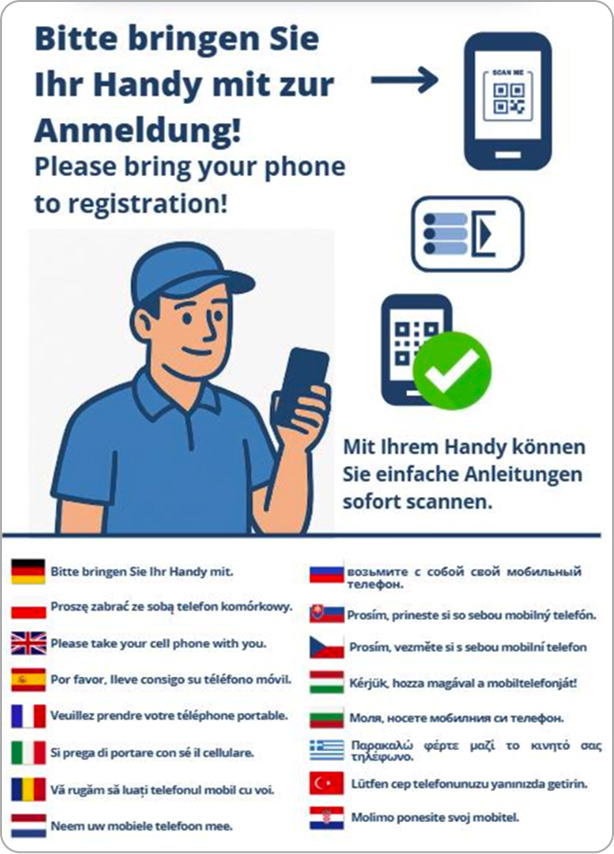
Information at the parking lot
Drivers confirm digitally — they automatically receive a DGUV-compliant certificate. Recurring drivers do not need to be trained again.

On the scale/reception
The load is registered and recorded at the scale or at the reception. Drivers must understand which documents they need to present and how the check-in process works.
An der Ladestelle
It becomes safety-critical at the loading point. Drivers must know exactly where to position, what safety equipment is required and how the unloading or loading process is carried out correctly.
That's what our customers say about Loady





More benefits of Loady's driver training

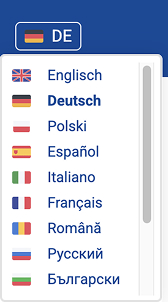
Available in 16 languages
German, English, Polish, Spanish, French, Romanian, Slovak, Dutch, Italian, Russian, Hungarian, Czech, Bulgarian, Turkish, Greek, Croatian
No app but mobile-friendly
Drivers access the instruction directly in the browser via QR code or link. No download, no hurdles.
Easy verification without repetitions
Integrated into the yard management system or other recording systems, drivers can digitally confirm the instruction and automatically receive a DGUV-compliant certificate. This means that returning drivers do not have to be trained again.
Driver briefing and step-by-step instructions with emergency protocol
A comprehensive driver briefing that covers all specific hazards at the site and provides life-saving information in an emergency.
Driver training in just a few days
You can create instructions yourself, or we can help you with them. With our experience, complex processes become understandable. Together, we record the relevant steps and identify critical safety points.
Generally for the location or charging point — specifically for specific applications.
1. IST analysis & data collection (1 day)
We'll get an overview of your current processes: How do you teach today? What are the use cases? What special features must be considered?
2nd on-site workshop (0.5 days)
Our team of experts comes to you and records on site what drivers really need to know. We take pictures from the driver's perspective, document every step of the process and identify critical safety points.
3. Preparation of driver instructions (~2 days)
We create the initial briefing, optimize it based on your feedback and develop further use cases and all language versions after your approval.
Shippers, logistics service providers and goods recipients use Loady together as a central data source for transport data











Discover more Loady features
All transport requirements are managed in a uniform, clearly defined data model. This creates a common basis for all parties involved.
With Loady, companies can synchronize their master data on loading and unloading requirements and thus provide all necessary information for commissioning, planning and implementation first-hand.
With Loady, freight tenders can be created quickly and easily, without manual searching and tedious reconciliation of requirements. All logistics specifications are structured and standardized so that freight forwarders work directly with the right information.
Not all goods can simply be loaded — incorrect orders or material incompatibilities can cause safety risks, product contamination or even legal violations.
With Loady's dispatcher view, planners work with a clearly structured interface that bundles all relevant charging requirements in one place.
With Loady, truck drivers receive easy-to-understand instructions in their language, which they can follow step by step and which are tailored precisely to the specific delivery or collection case.
The Loady driver view provides all relevant transport and safety requirements — directly on the device, clearly and up to date.
Loady's interfaces enable secure and easy data exchange with business systems and logistics applications. They facilitate collaboration and make data available where it is needed.