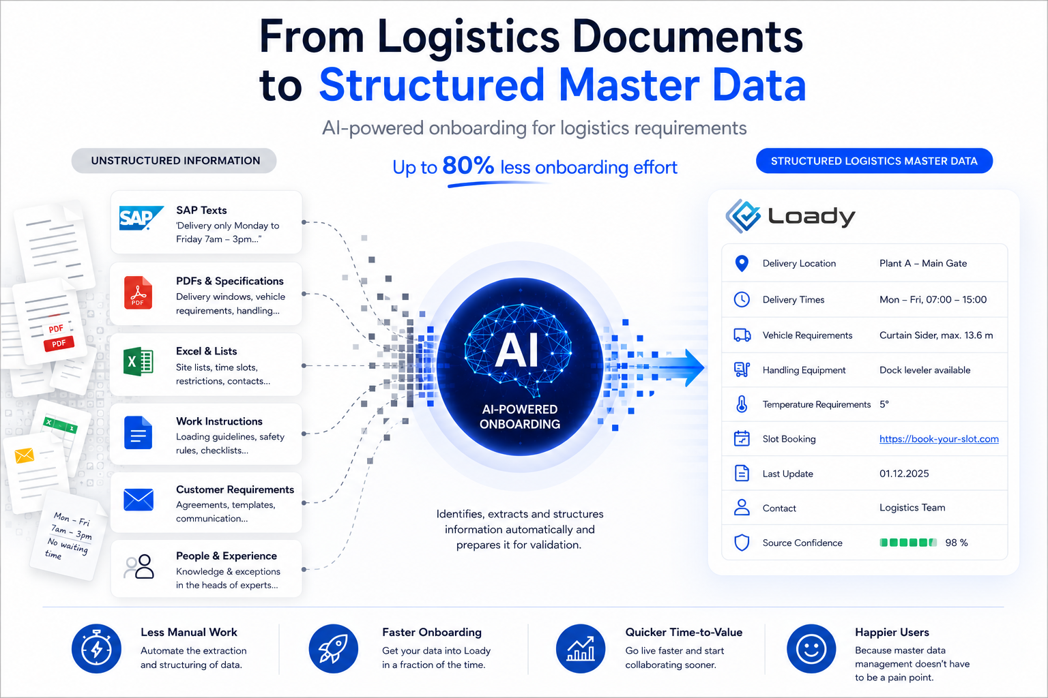
Mannheim, June 11, 2026. For many companies, the digitalization of logistics requirements begins with a tedious task: information from SAP comments, Excel files, emails, and individual customer specifications must first be structured and transferred into a digital data model.
With a new AI-powered onboarding solution, Loady now significantly reduces this effort. Initial projects show that up to 80 percent of existing data sets can be automatically processed and integrated into Loady's standardized structure. Users then only need to review, supplement, and approve the results.
“In many companies, relevant logistics information is fundamentally available – but often incomplete, outdated, inconsistently maintained, or even contradictory. This is precisely where we step in: We reduce the one-time initial effort and help companies work faster with reliable, structured logistics data,” says Elzbieta Wiankowska, co-founder and COO of Loady. “With over 20,000 product data sets and logistics requirements from thousands of real transport processes, we now have the specialized data foundation to automate this task efficiently and with high quality.”
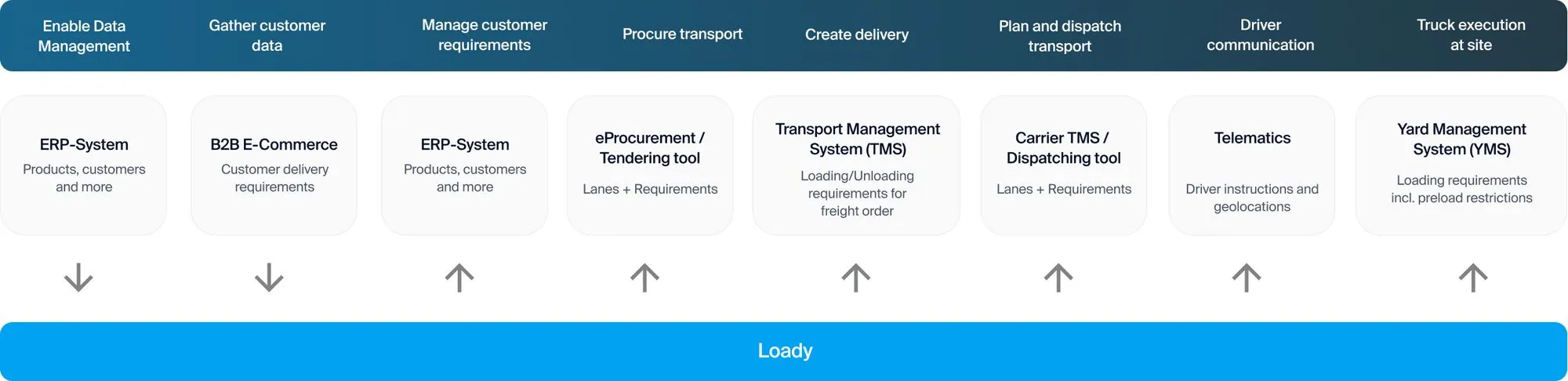
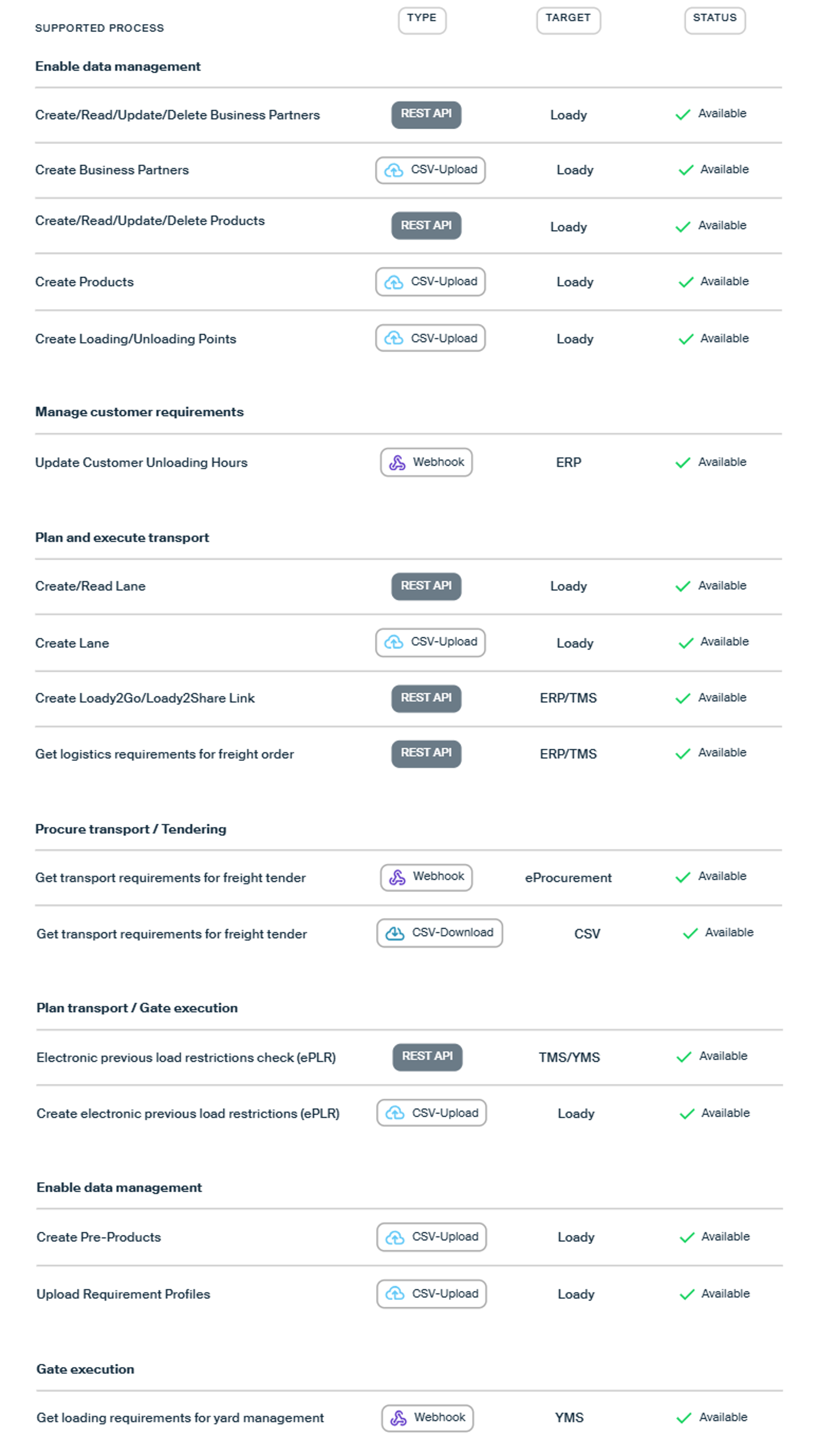
The data prepared in this way remains entirely under the control of its owners. Via standard interfaces, it can then be synchronized with existing ERP, TMS, yard, or telematics systems or driver apps and shared with business partners.
“We see Loady as a universal connector for logistics requirements,” explains Dennis Jantos, co-founder and CTO of Loady. “Logistics operates with a multitude of different systems. Our goal is for information to be available where it is needed, regardless of software boundaries.”
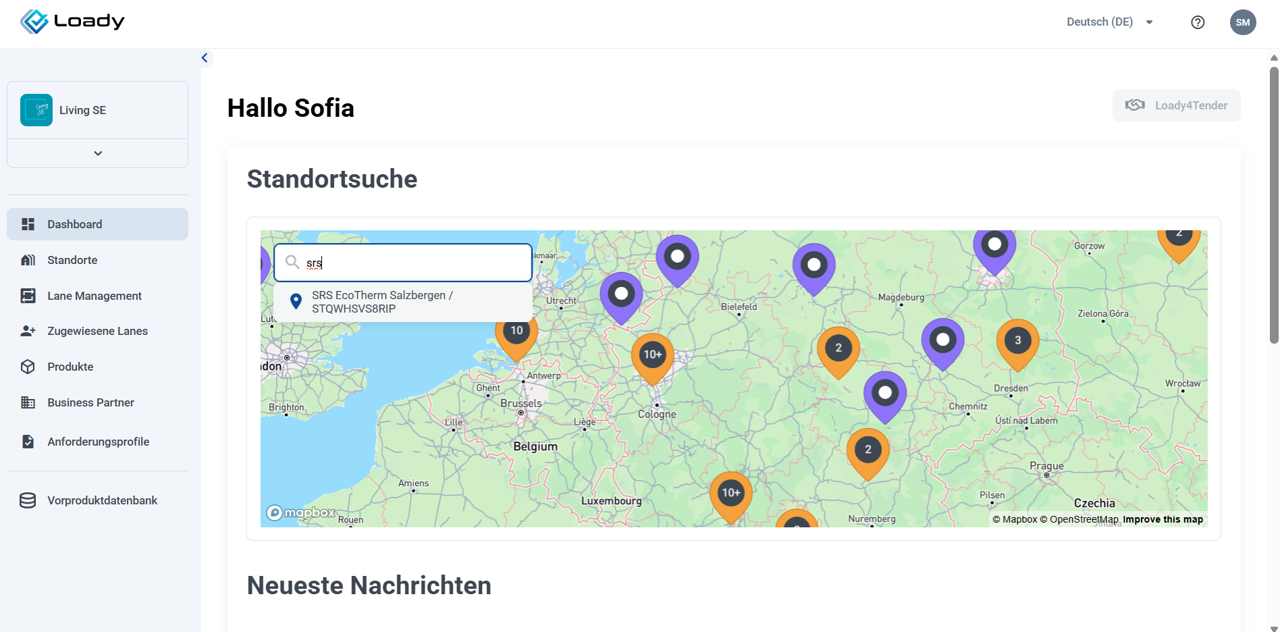
Companies that do not use direct system integration can alternatively provide the information via the multilingual web platform. Smaller and medium-sized freight forwarders particularly benefit from this, as dispatchers and drivers can access current loading and unloading requirements without additional IT projects.
The new onboarding solution is an important component of Loady's AI strategy. AI methods are already being used at various points on the platform to support users in processing and maintaining logistics requirements. In the future, further functions will improve data quality, detect inconsistencies, extract information from documents, and proactively assist users in maintaining logistics master data.
“AI is not an end in itself for us,” says Jantos. “It helps us overcome the biggest hurdle in digitalization: the path from unstructured information to usable data. Data onboarding is an important milestone in this process. In the long term, we want to support companies throughout the entire data lifecycle – from acquisition and quality assurance to automated provision in operational processes.”
With this, Loady aims not only to make logistics requirements digitally available but also to keep them permanently up-to-date, usable across systems, and accessible to all stakeholders along the supply chain.
About Loady
Founded in 2023 in Mannheim, Germany, Loady lays the foundation for the next generation of digital logistics processes. By standardizing and digitally providing logistics requirements, Loady enables their cross-system use along the supply chain – from freight procurement, commissioning, and dispatching to delivery and control. In this way, logistics knowledge becomes a digital resource for efficient collaboration, automation, and the use of AI. Already today, Loady contains logistics requirements for over 20,000 products and 500 sites in Europe, North America, and Latin America, available in 17 languages.