Key takeaways
- A small change, a big impact: a customer changed its pump requirement. The carrier didn't notice, and the truck was rejected.
- The cost: more than ten people across three companies, several days of troubleshooting and a delivery delayed by almost a week.
- The root cause: the information existed, but only as free text that was communicated, not validated.
- The fix: Logistics Execution Readiness – structured requirements, controlled updates and verification before execution.
- Even more critical for AI: an intelligent dispatcher is only as reliable as the operational requirements it can use.
How one overlooked change in unloading requirements disrupted an entire chemical delivery.
The transport was planned. The carrier was assigned. The freight order contained the delivery instructions. Everything seemed to be under control.
Until the truck arrived at the customer's site.
The truck had the wrong pump.
The customer had recently changed its unloading requirements. The updated information had even been entered into the chemical manufacturer's ERP system. But the carrier hadn't noticed the change. The truck was rejected.
What followed was far more than a minor operational inconvenience. More than ten people across three companies became involved in resolving the issue. Troubleshooting and arranging a replacement transport took several days. The delivery was delayed by almost a week.
All because one operational requirement had changed – and the change hadn't reached the people who needed to act on it.
What actually went wrong?
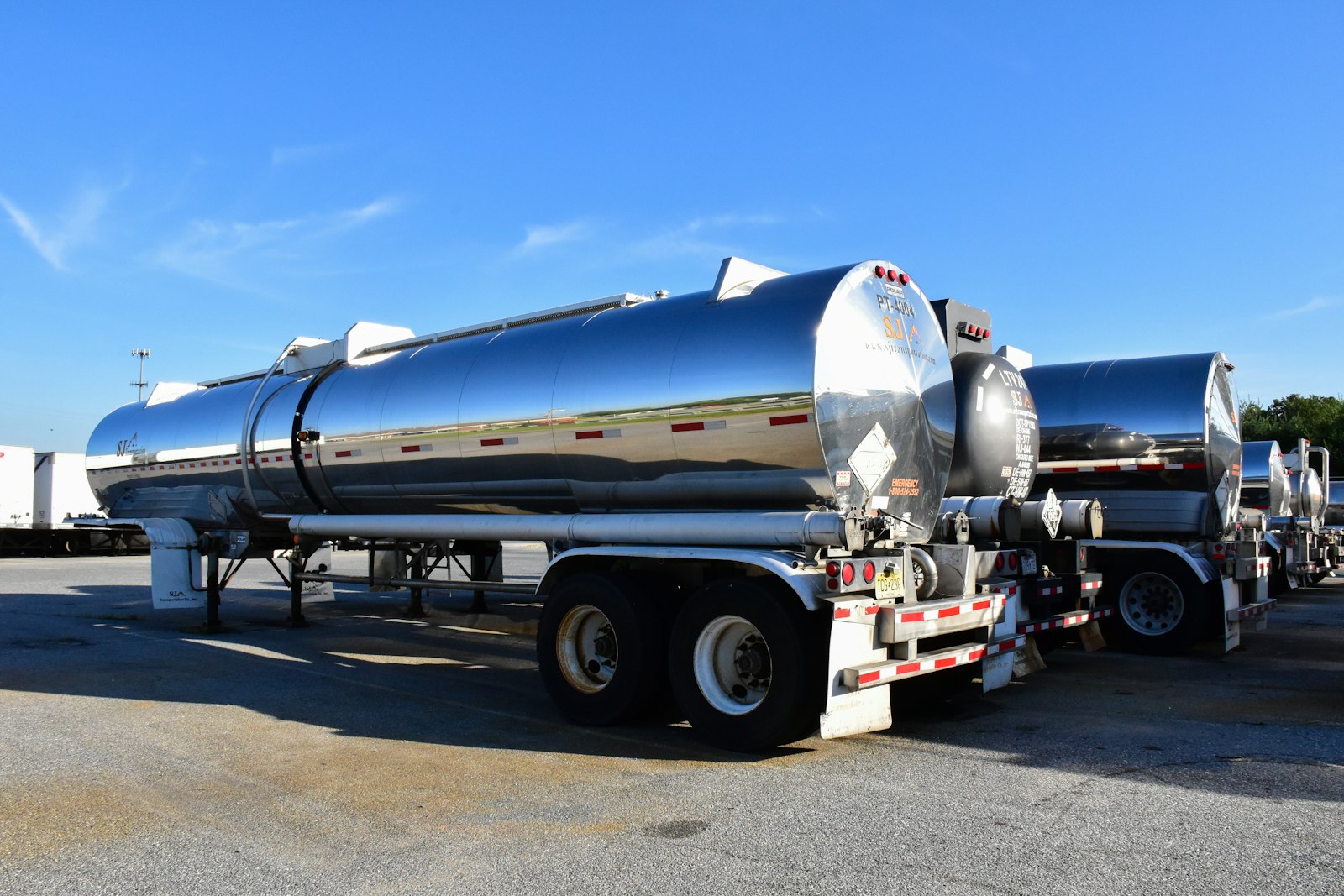
The case involved a bulk liquid chemical shipment from a chemical manufacturer to an industrial customer.
The customer's unloading requirements were originally maintained in an Excel spreadsheet as free text. From there, the information was transferred into the manufacturer's ERP system and subsequently into the freight order provided to the carrier.
Then the customer changed its pump requirements. Customer Service updated the relevant text fields in the ERP system. The information was technically available and included in the transport documentation.
However, the change was not recognised by the carrier. The truck arrived with equipment that no longer met the customer's requirements and could not be unloaded. A routine delivery had turned into a coordination problem involving the manufacturer, the carrier and the receiving customer.
The hidden cost of one overlooked requirement
The consequences extended far beyond the rejected truck. Employees across three organisations had to investigate the issue, clarify responsibilities and organise a replacement transport.
- The manufacturer faced additional coordination effort, lost contribution margin and damage to customer service performance.
- The receiving customer experienced operational disruption and additional costs associated with waiting times.
- The carrier had to arrange another transport, while the originally assigned equipment could not be used for the planned delivery.
No complex technical failure had occurred. No major system outage. No exceptional transport situation.
The right information existed. But it was not available in a form that reliably supported the execution process.
Why free-text logistics requirements are a hidden risk
This case illustrates a common weakness in logistics operations. Critical requirements are often maintained as free text in ERP systems, spreadsheets, customer instructions or transport documents. A typical instruction might say:
“Unloading requires a specific pump type.”
For a human reader, this is understandable. But for automated transport planning, carrier selection or equipment validation, it is not necessarily usable. The system may know that a text field contains unloading instructions. But it does not automatically understand that a specific pump is mandatory for this delivery. And when the text changes, the system may not recognise that the change affects the suitability of the assigned vehicle.
Three weaknesses become apparent:
- Requirements are communicated, not validated. Adding an instruction to a freight order does not ensure that the assigned equipment meets it.
- Changes are documented, not necessarily acted upon. Updating a text field does not guarantee that the carrier recognises the change or adapts the transport plan.
- Critical operational information depends on human interpretation. Dispatchers and drivers must identify relevant instructions among potentially large amounts of text.
This may work most of the time. But when it fails, the consequences can be disproportionately expensive.
What would Logistics Execution Readiness have changed?
The case illustrates why Logistics Execution Readiness (LER) matters. LER means that all relevant operational requirements for a planned transport are known, current, structured, accessible and sufficiently fulfilled before physical execution.
In this case, three elements would have made a difference.
Structured unloading requirements
Instead of maintaining the pump requirement exclusively as free text, it could be captured as a structured attribute associated with the relevant unloading point. This would make the requirement available for equipment selection and compatibility checks.
Controlled updates and information sharing
When the customer changes a requirement, the updated information needs to reach the relevant parties and systems. A change in unloading equipment should not remain hidden in a revised text field. It should be identifiable as a change that may affect already planned transports.
Verification before execution
Before dispatching the truck, the required unloading equipment could be compared with the equipment available on the assigned vehicle. If the conditions do not match, the discrepancy could be identified before the truck leaves.
The result would not simply be a more complete freight order. It would be a transport checked against the operational conditions required for execution.
Why this matters even more for AI-driven logistics
Now imagine the same process being handled by an AI dispatcher. The AI receives a freight order, selects a carrier, assigns a vehicle and schedules the delivery. All relevant fields are populated. The transport appears ready.
But the unloading requirements are hidden in free text, and the changed pump requirement has not been translated into a structured condition. How should the AI determine whether the assigned vehicle is suitable?
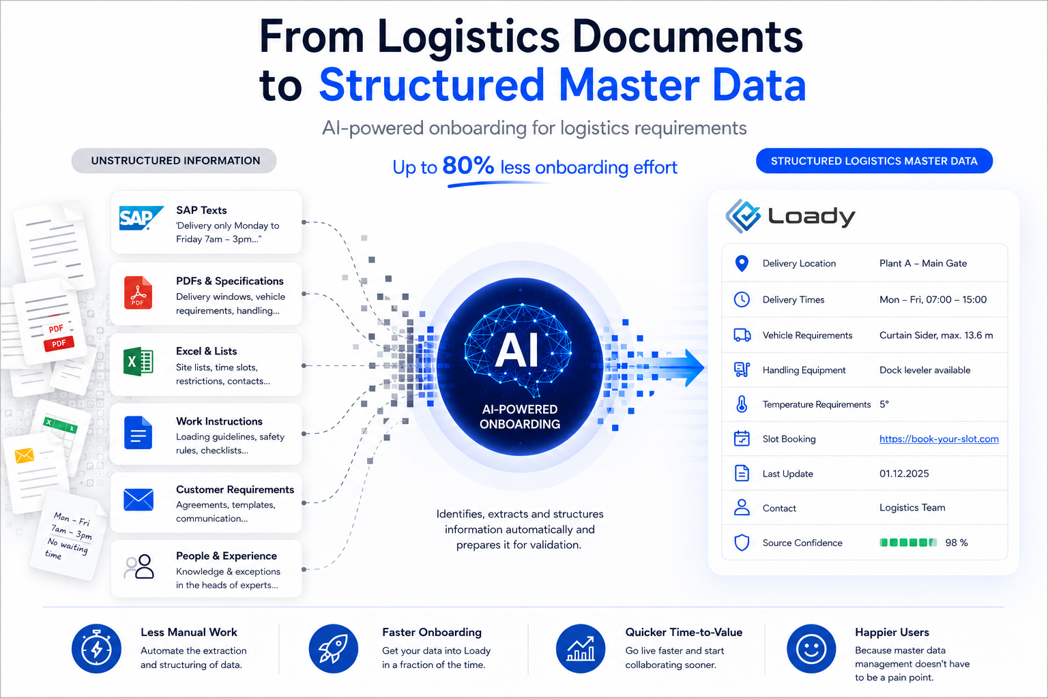
AI can help extract and interpret information from unstructured documents. But reliable automated decisions require current, contextualised requirements that can be evaluated against actual transport conditions. An intelligent dispatcher needs to know which equipment is mandatory, which equipment is available and whether the two are compatible.
An intelligent dispatcher is only as reliable as the operational requirements it can use.
How Loady addresses the underlying problem
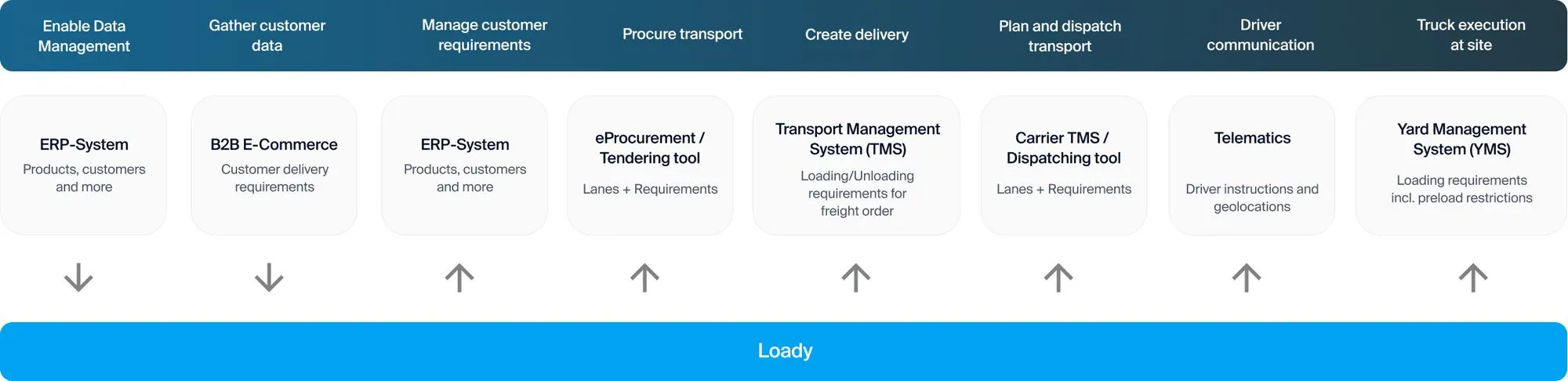
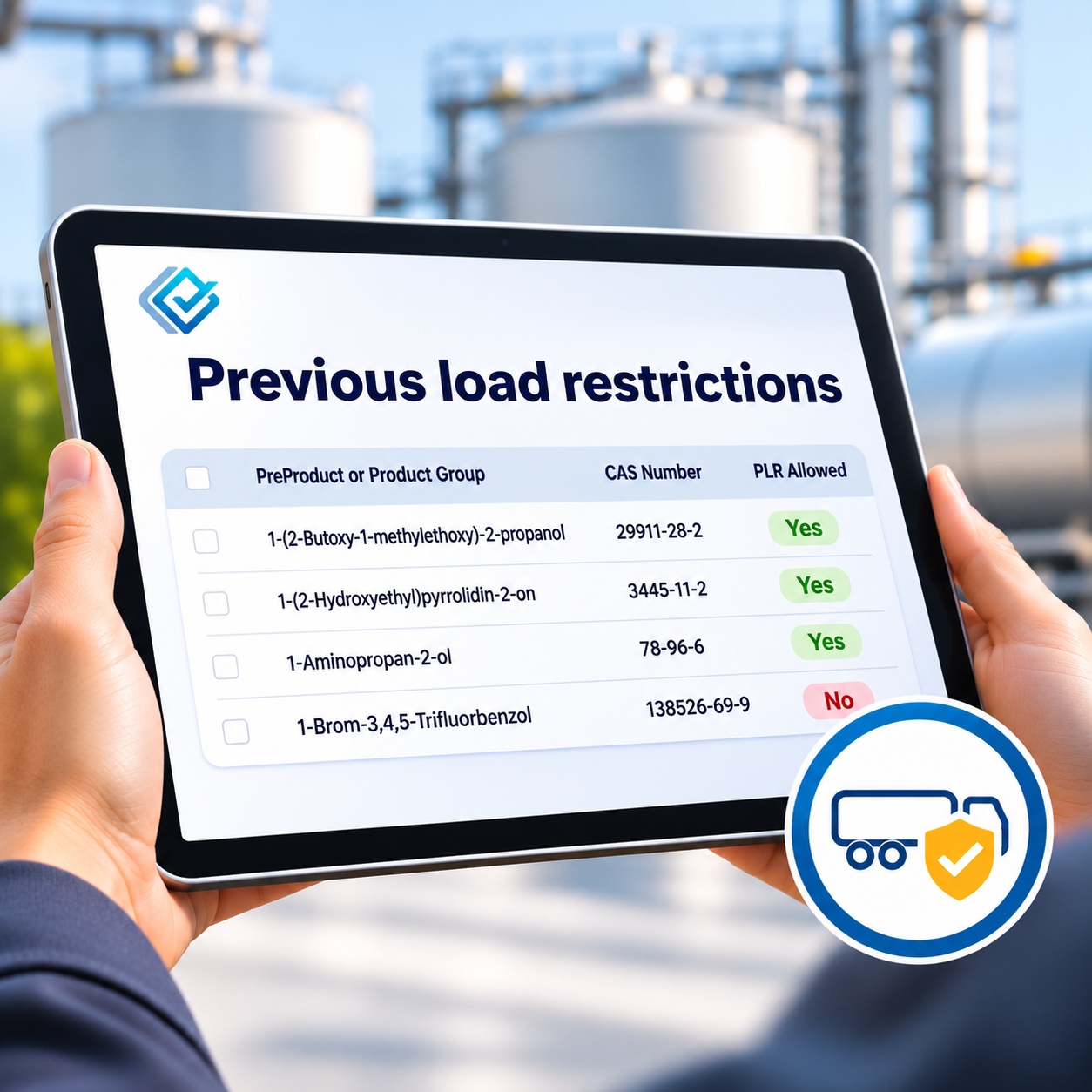
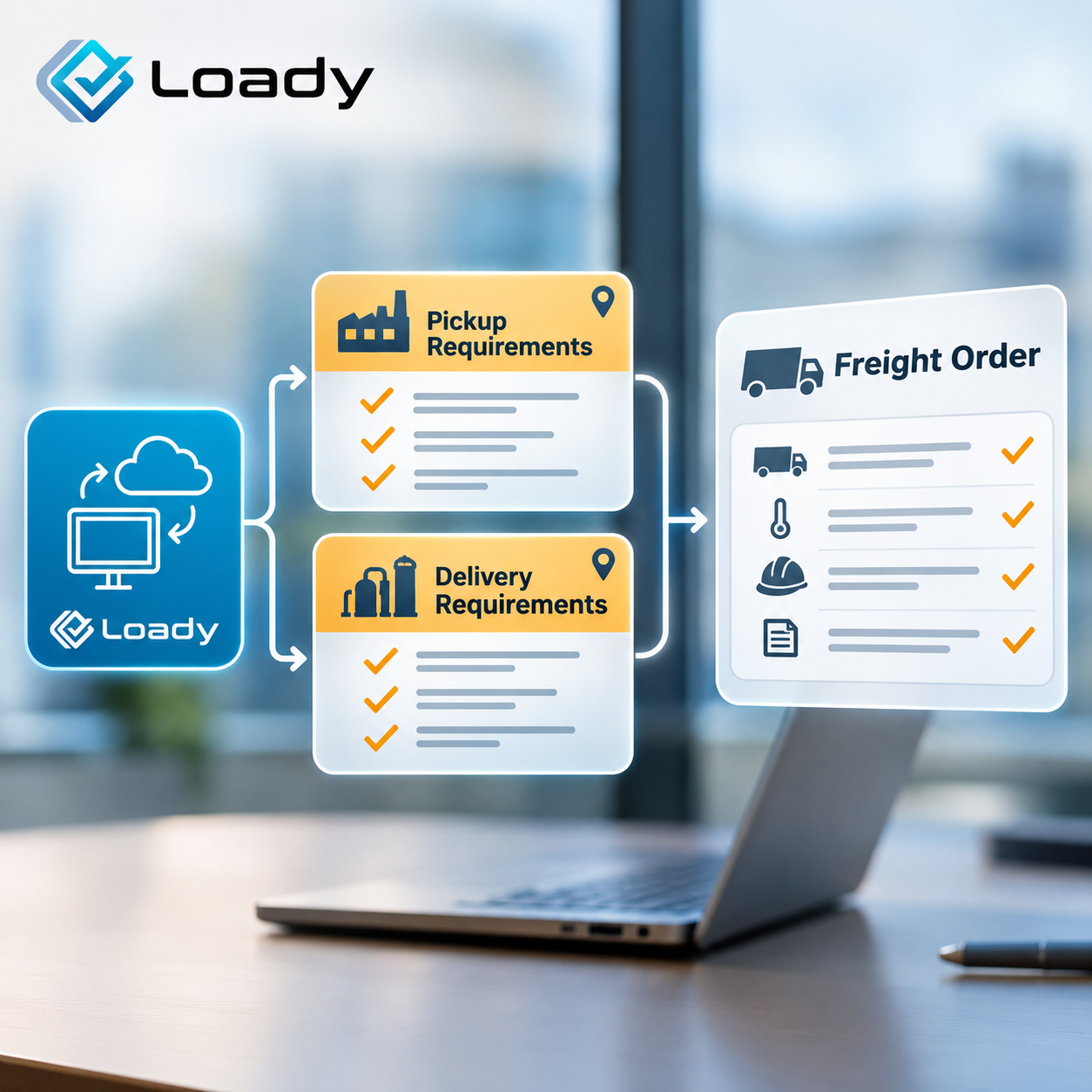
Loady focuses on structuring and sharing the logistics requirements that determine whether transports can be executed successfully. Instead of relying exclusively on free-text instructions in individual orders, companies can maintain standardised requirements for sites, loading and unloading points, products and transport lanes. These requirements can be shared across company boundaries and made available to connected ERP, TMS and other logistics systems through APIs.
For the pump example, the principle is straightforward: the unloading point has a defined equipment requirement. The requirement is maintained in a structured format and made available to the relevant systems and logistics partners. When that requirement changes, connected processes can use the updated information rather than relying on someone noticing a change in a text field.
Automated compatibility checks and change-triggered revalidation can then be implemented in the surrounding planning and execution processes.
The objective is not to add more information to freight orders. It is to make existing logistics requirements usable for operational decisions.
The most expensive logistics problems are not always the most complex
One wrong pump. A rejected truck. Several days of troubleshooting. A delivery delayed by almost a week.
The original problem was a changed unloading requirement. The underlying problem was the way operational information was managed and communicated.
As logistics companies invest in AI, autonomous transport planning and increasingly sophisticated execution systems, these fundamental data challenges become more important, not less. Because automating a process does not eliminate missing requirements.
A freight order can be complete. The transport can still be impossible to execute. That is why Logistics Execution Readiness matters.
Make logistics requirements ready for execution
Loady helps companies structure, maintain and share site, product and transport requirements across the logistics network. Reduce manual clarification, improve transparency and build the data foundation for reliable transport execution and automation.
Right logistics requirements. Ready to execute.
Learn more at www.loady.com.
Further reading
- Glossary: Logistics Execution Readiness
- Glossary: Delivery requirements
- Glossary: AI-Ready Logistics Data
- Glossary: Loading and unloading instructions
- Loady Developer Portal is live