AI-ready logistics data
Logistics data that people and AI can work with.
Loady makes loading and unloading requirements structured, reliable and machine-readable, so teams, systems and AI agents work with the same information.

Loady makes loading and unloading requirements structured, reliable and machine-readable, so teams, systems and AI agents work with the same information.
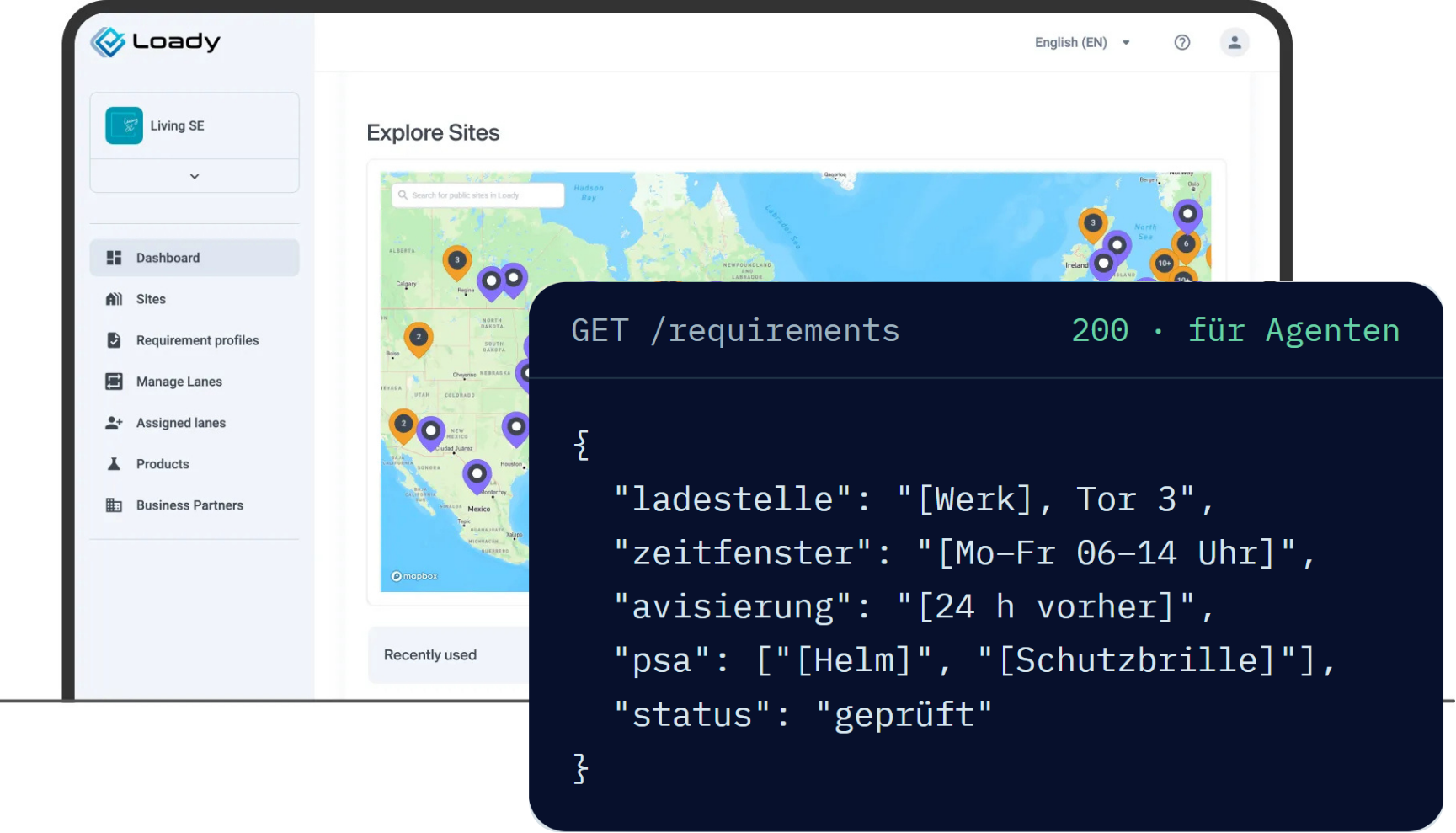













AI agents are taking over more and more logistics workflows. To work, they need structured, verified requirements instead of PDFs and emails. Loady is the data layer that dispatch, systems and agents build on.
From tendering through dispatch and transport to the loading point, every product uses the same Loady data.
Complete tender documents from maintained requirements, also for AI-powered sourcing tools.
Learn moreAll requirements travel with the transport order, for dispatch, TMS and AI agents.
Learn moreChecklists for gate, ramp and loading point, usable directly in the carrier's TMS and the plant's yard system, including by AI agents.
Learn moreAutomated checks of previous load restrictions and cleaning requirements for liquid transports.
Learn moreMultilingual, visual, via QR code or link, so drivers arrive at the gate well prepared and find their way on site.
Learn moreShippers, carriers, consignees and their systems work with the same, always current requirements.

Predefined fields for liquid, bulk and general cargo replace PDF attachments and emails. Readable for people and machines.

Changes are available instantly to everyone involved and to connected systems, versioned and traceable.

Role-based approvals define who sees which data: people, partners and agents.
fewer incidents on the last mile
more efficient data management
months to first results
“Loady enables us and our supply chain partners to identify and use improvement potential, not only for our own loading points but also for our logistics partners and customers.”
Fewer incidents and escalations thanks to reliable information, even when conditions change.

Reduce operational friction without additional systems or more staff. Even for transports with new logistics partners to new customer sites.

Digital collaboration across company boundaries, from purchasing and ordering to dispatch and delivery.

Onboard drivers faster and simplify interactions on site, even with smaller teams.

Reduce CO₂ through reliable planning. Every transport that works the first time saves emissions.
Loady is a platform for managing and sharing master data.
Loady has a SaaS licensing model and is based on an annual subscription. This depends on the role of tany (shipper, goods recipient, external warehouse logistics or freight forwarder) and whether the APIs are used or not.
Loady is licensed in a scalable pricing model based on the number of objects that are managed in Loady.
Loading points, products and driver instructions are chargeable. There is also a modular approach for certain functions, e.g. to support freight tenders. Depending on the setup, a start is possible within a few weeks — including training, data import and system connection.
Loady is GDPR-compliant and is based on a secure, cloud-based architecture model with:
Loady offers standardized REST APIs and integrations for:
Loady follows a role-based governance model and ecosystem approach:
All changes are traceable, versioned and auditable.
ERP, TMS or Yard Management Systems plan or carry out transports or manage the arrival and dispatch of trucks. They are operational applications and generally do not contain complete and structured loading and unloading requirements. However, since they need them for the operations they support, they require an additional creation of master data in the respective systems.
Particularly when it comes to the unloading requirements of customers (goods recipients), shippers usually have free descriptive texts or linked PDF files that offer few digital uses (e.g. “Information for Freight Forwarders”, “Business Partner Information”, “Site Rules and Directions”). In addition, this information is only available within the respective application and is generally handled by companies as a separate, proprietary data silo, which poses the major challenge of reactively and manually following up on updates to the data.
Loady fills exactly this gap by providing a central, standardized data source that can be used by all systems via interfaces and thus provides targeted support to various users throughout the logistics process.
Loady is a central, cloud-based data hub for loading and unloading requirements along the transport chain. It provides standardized information on how to load or unload certain products at industrial sites.
It answers questions like: What are the openning hours and closing days? What technical equipment is provided - and what needs to be brought by the carrier? What are the safety instructions and what personal protective equipment is needed? What does the driver need to know to manage himself at the site? Is slot booking required and if so: who needs to book the slot and how? - etc.
The collaborative approach of Loady makes it possible to share data from a single source of truth. So the parties involved in a transport use the same data set and get any updates directly in their systems: suppliers (shippers), their customers (consignees) and freight forwarders, including their subcontractors and drivers.
In a no-obligation call, we'll show you where your processes and systems benefit from Loady data.