Key takeaways
- Free text is not reliable: “Store cool”, “Keep frost-free” or “Careful, warm!” can be read in ten different ways.
- Too little is dangerous: if temperature requirements are not met, product quality and transport safety suffer.
- Too much is expensive: if stricter requirements are applied just to be on the safe side, it costs money for nothing.
- Free text is a black box: it cannot be analysed, compared or checked automatically.
- The solution: maintain temperature requirements in a structured way, per product, loading point and unloading point, and share them with all partners.
A zebra and a polar bear in the same trailer: what is cosy for one is torture for the other.
Why free text in temperature requirements puts product quality, safety and budgets at risk – and what helps instead.
Somewhere in an ERP system, there is a free text right now. It says: “Product temperature-sensitive, please observe.” It was written eight years ago by a colleague who now grows bonsai trees. It is observed. Sometimes one way, sometimes another.
Observe what, exactly? Good question. At how many degrees does it become critical? Does it apply in winter too? During loading, or only on the road? The free text stays silent. The carrier guesses. And the product hopes for the best.
Free text: logistics' favourite game of telephone
Free text feels convenient. You jot something down, and everyone knows what to do. Or so you think. In reality, logistics has been playing a game of telephone with temperature requirements for decades: the shipper writes, the ERP stores, the dispatcher abbreviates, the carrier translates, the driver interprets. What arrives at the end often bears only a distant resemblance to the original.
The problem is not that anyone is sloppy. The problem is that free text is not reliable. It leaves room for interpretation, and with temperature, room for interpretation almost always goes wrong, in one of two directions.
You see it every year as soon as the first cold snap sweeps across Europe: suddenly, planning turns into daily firefighting. Here is the thing: Winter doesn't break transport plans. Bad master data does. If temperature rules are not stored in a structured way in product master data, every cold spell becomes an exception-management project.
Direction 1: too little. That gets dangerous
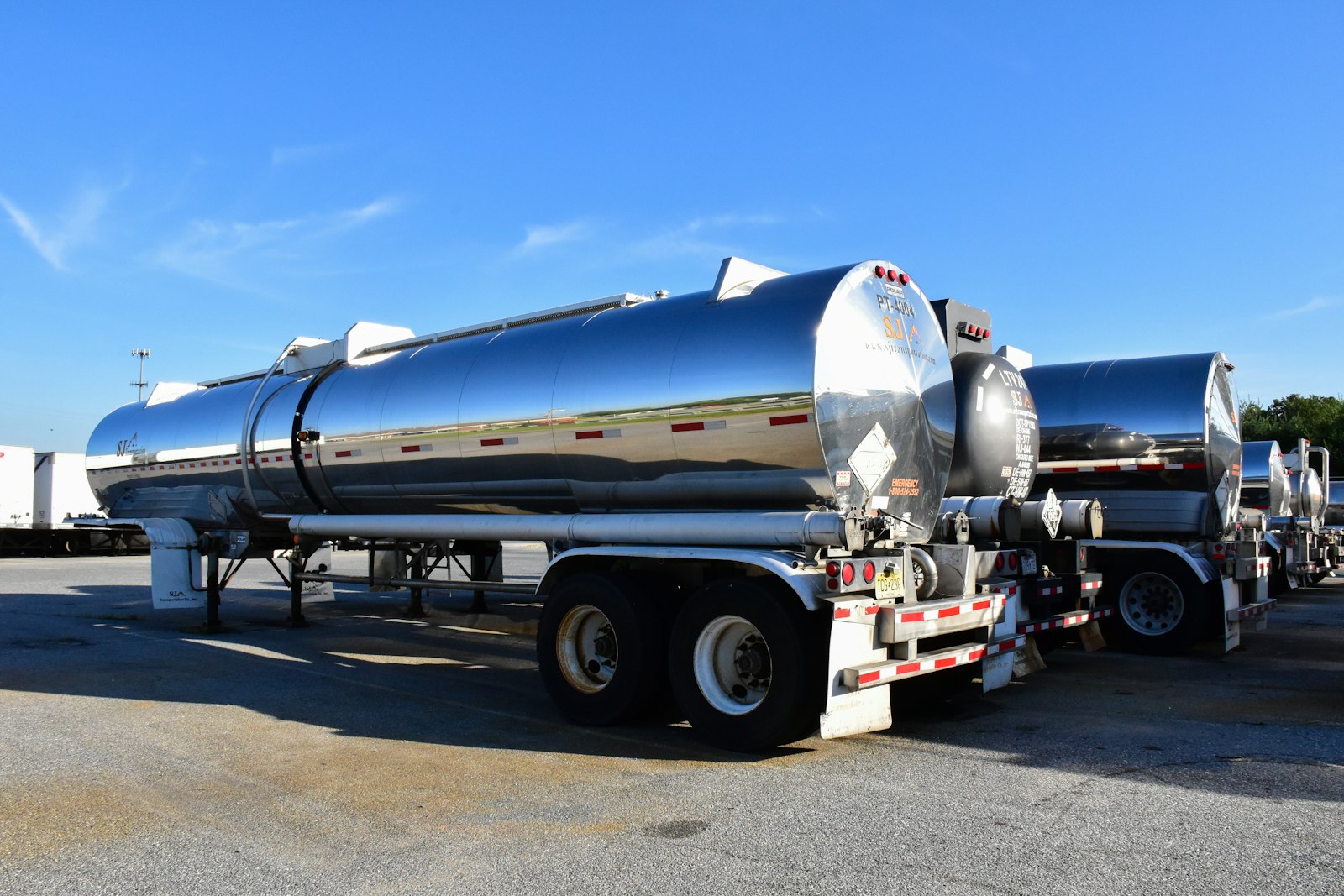
“Temperature-controlled” turns into “It'll be fine”. The tank spends hours in the midsummer sun, or sits overnight in a car park at sub-zero temperatures. And no, “too cold” is not harmless. For chemicals, pharmaceuticals or biological materials, cold can:
- change viscosity
- trigger crystallisation
- damage product stability
- break compliance
In the best case, only the goods are ruined. In the worst case, it becomes a safety issue. Either way, the complaint ends up with the shipper.
Direction 2: too much. That gets expensive
When in doubt, people play it safe: rather the heated vehicle, rather the reefer, rather load at night, even when none of it is necessary. Sounds responsible, but it costs money on every single transport. And because nobody ever clarifies the free text, it stays that way. For years.
And on top of that: zero transparency
How many of your products actually have temperature requirements? Which ones in summer, which in winter? Where are you paying for heating nobody needs? With free text, you won't find out, unless someone reads through thousands of lines, and even then everyone understands something different. Free text is a black box. Analyse, compare, check automatically? Not a chance.
No more guessing: temperature requirements in Loady
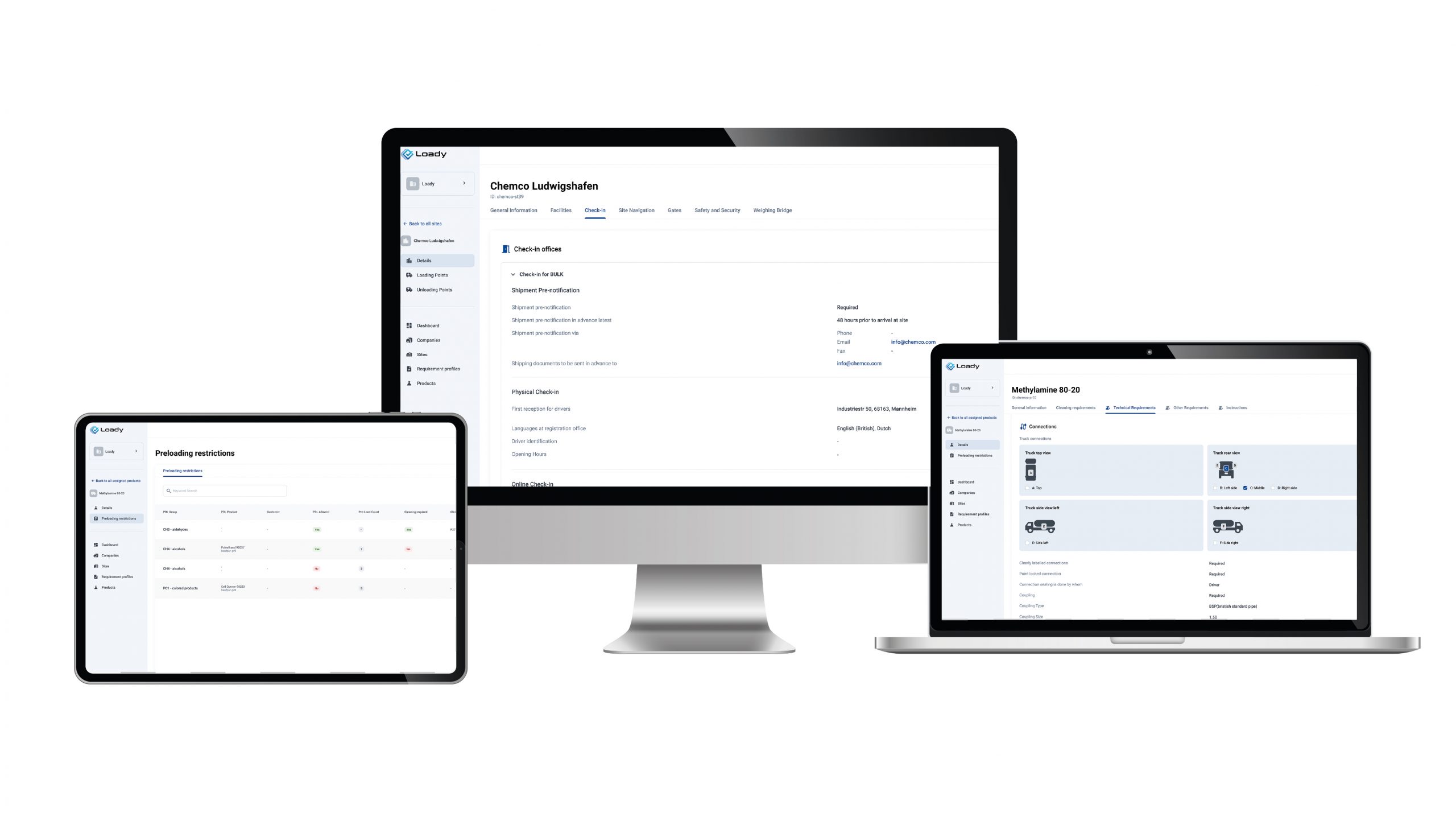
In Loady, temperature leaves no room for interpretation. Instead, there are fields, exactly where the requirement originates.
Three levels, one truth
- Product: product-specific temperature requirements that apply wherever the product travels
- Loading point: product-specific requirements that depend on the location, because summer in southern Spain is not summer in northern Germany
- Unloading point: the temperature requirements of the respective consignee
Boring but powerful: numbers instead of adjectives
Instead of “please keep cool”, Loady holds:
- Minimum and maximum contact temperature, for example ≥ 5 °C and ≤ 30 °C
- Temperature at loading, during transport and at unloading
- Required thermo equipment, including unit settings
- Heating requirements for tank transports
- Additional notes such as “Do not freeze”, “Protect from heat” or “Temperature-controlled transport required”
And because temperature depends on the season, there is an optional calendar function: time-bound rules (for example “keep at 15–20 °C from November to March”), loading windows by time of day (for example 8 pm to 6 am) and seasonal notes. The summer rule then applies in summer. And not accidentally in January as well.
Shared with everyone who needs to know
Maintained once, every partner receives the same data:
- Via link: carriers and drivers see the requirements without a Loady account, in their own language.
- Via API: ERP, TMS and procurement systems take over the data directly, without anyone retyping it (and getting creative along the way).
No more game of telephone. Just one source that everyone understands, systems included.
What's in it for you
- Product quality and safety: requirements are met because they are unambiguous, not because someone guessed right.
- No more paying for caution: heating or cooling happens only when it is really needed, and only during the period it is needed.
- Finally, transparency: you see at a glance which products have which temperature requirements, and can analyse, compare and check automatically.
- Maintain once, everyone knows: every partner receives the same data, via link or via API.
Free text is welcome to stay in greeting cards. It has no business in your temperature requirements.
Whether it's a heatwave or a cold snap: precise master data keeps supply chains safe and moving.
Be honest: where do your temperature requirements live today – in structured fields or in free text?
Try it now
Would you like to get your temperature requirements out of the free-text black box? Get in touch: info@loady.com.
Further reading
- Help & tips: Temperature requirements in Loady
- Glossary: Pickup requirements
- Glossary: Delivery requirements
- Data onboarding support with