
Key takeaways
Loady has received a research grant for the development of the electronic Previous Load Restriction Check (ePLR). The funding supports an approach that addresses a long‑standing, unresolved core issue in chemical logistics: the systematic and reproducible application of previous load restrictions in road transport.

Previous load restrictions are a key component of quality assurance—and at the same time one of the most frequent causes of operational disruptions. In practice, they regularly lead to transports being cancelled, processes being interrupted, or, in the worst case, quality risks. Despite their relevance, many companies still do not manage them systematically, but rely on fragmented data sources and manual decision‑making.
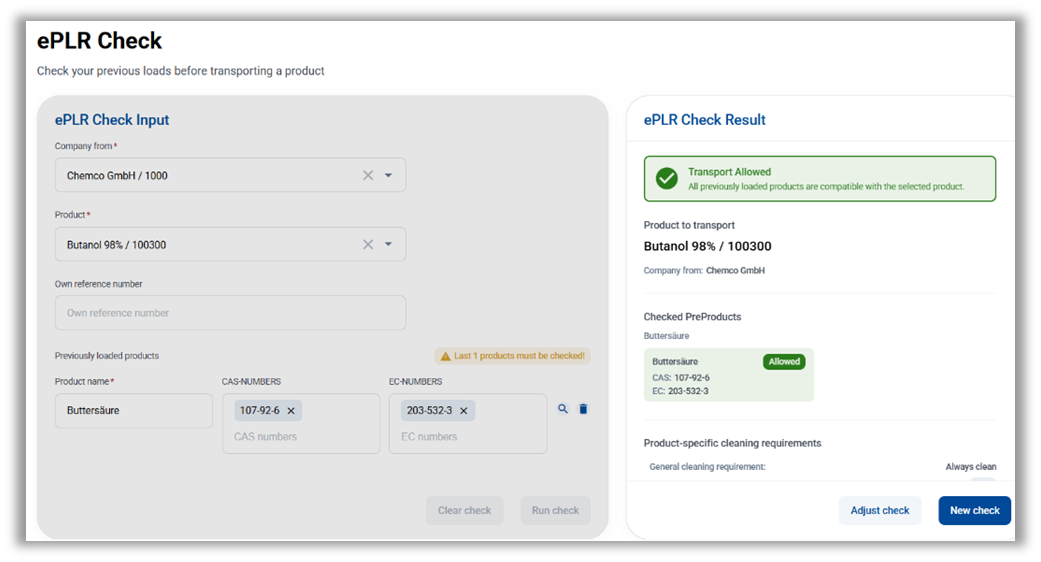
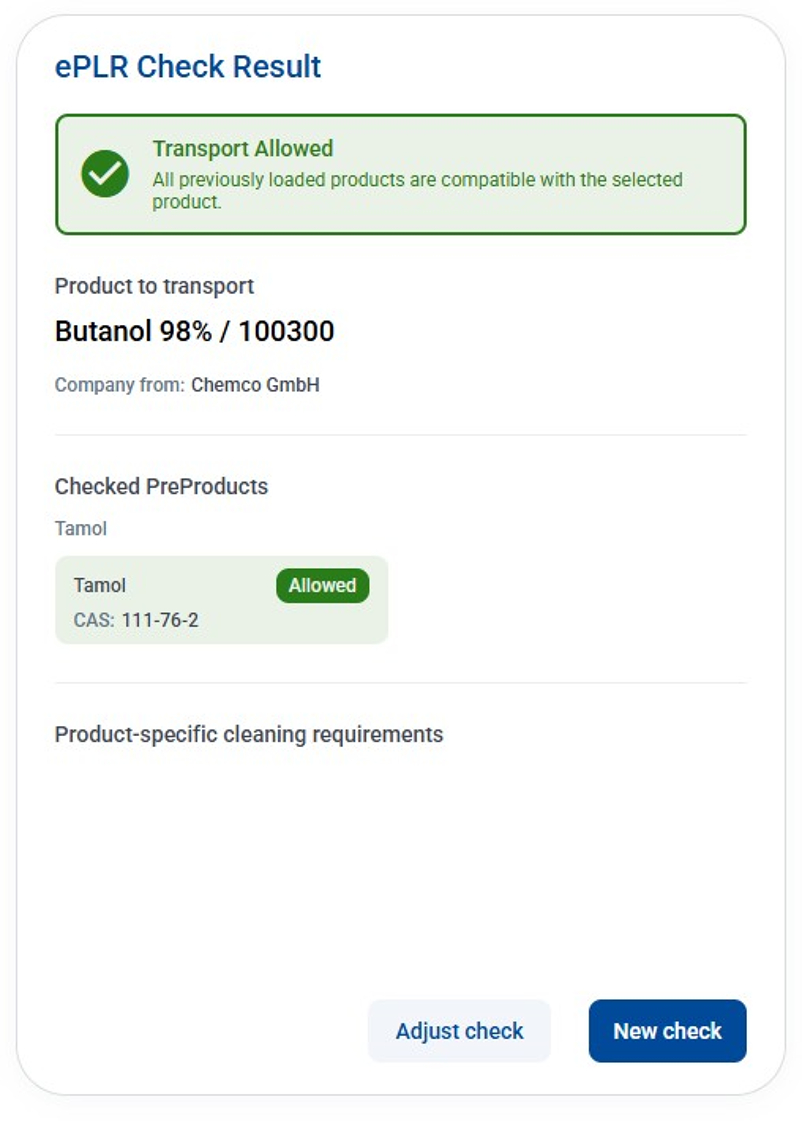
The ePLR Check directly addresses this gap. Its goal is to translate previous load restrictions into a structured, machine‑readable data model for the first time and to derive a digital decision logic from it. Two central challenges are tackled: the unambiguous identification of chemical products despite inconsistent naming, and the mapping of complex, company‑specific rule sets—including the consideration of loading histories.
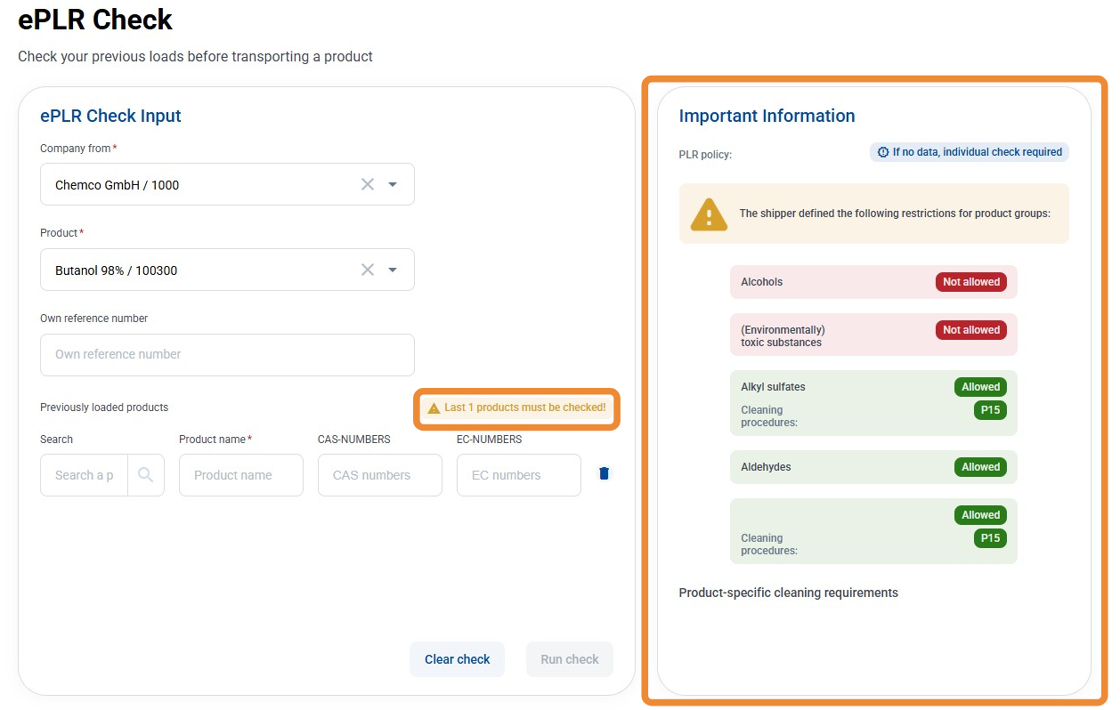
The innovative value lies in the combination of these elements: semantic classification of substances, modelled chemical properties, and a dynamic, version‑controlled rule set. This transforms what has so far been an interpretative assessment into a systematic decision—automated, consistent, and scalable. Existing approaches, by contrast, rely largely on static matrices or expert knowledge and do not adequately reflect the actual complexity.
The certification authority confirms both the novelty and the technical challenges of the project, underscoring its research and development character.
The ePLR Check will be deployed productively for the first time in 2026 at two major European chemical sites. This transforms a previously fragmented topic into an integrable digital process—with immediate impact on process stability, risk reduction, and cost control.